Faith, danger, and the need to speak.
Examining the ongoing violence against Christians in Nigeria and the renewed global spotlight.
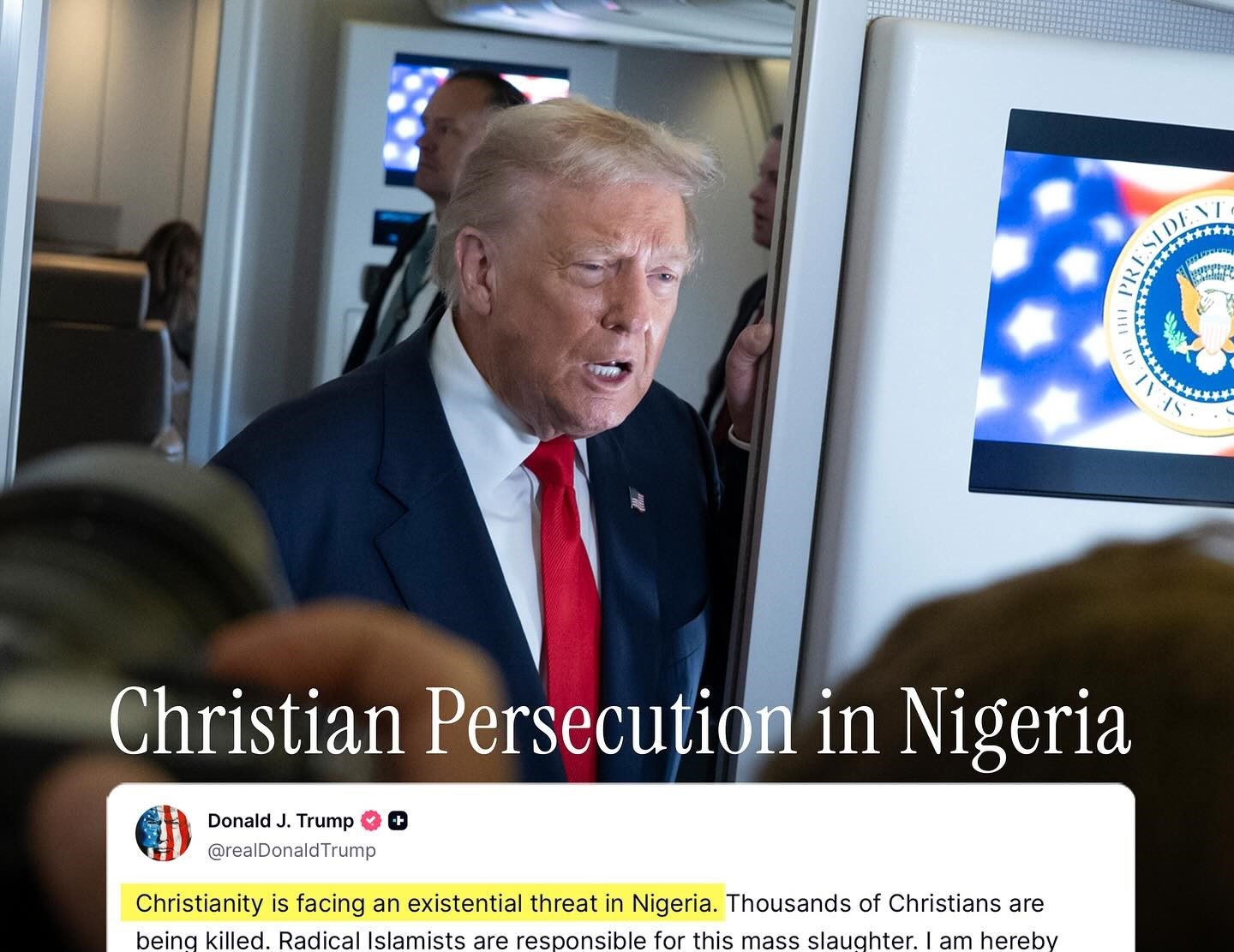
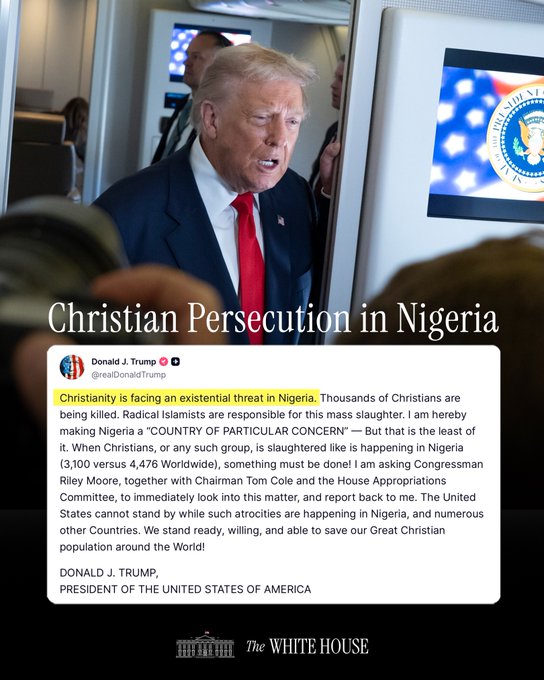
Yesterday, Friday, 31 October, many friends and colleagues across the world sent me screenshots of President Donald J. Trump’s statement concerning the persecution of Christians in Nigeria. At first, I thought it was another AI-generated message circulating online. But when I checked Truth Social and confirmed again on X (Twitter), I realized it was genuine.
This announcement has started a global conversation about religious freedom, justice, and human dignity. When the President of the United States publicly recognized how serious Christian persecution in Nigeria is, something many humanitarian observers have called a developing genocide, it sent a strong message to leaders and communities around the world. But for those of us from Nigeria, this is not breaking news. This is our lived experience.
A Painful Reality We Grew Up With
I was born, raised, and lived in Nigeria. From my earliest years, I grew up hearing too many stories of churches set ablaze, pastors abducted, believers murdered, and entire Christian communities displaced across the Northern and Middle-Belt regions, where my own home state is located. These were never distant, abstract events. These were the lived experiences of real families, real congregations, real communities we knew by name. I am a member of the Evangelical Church Winning All (ECWA), a large denomination with a long-standing mission presence across Northern Nigeria. As children and youths in ECWA, one of our constant prayer points was:
“Lord, protect our brothers and sisters in the mission fields and in conflict zones.”
This prayer was not recited out of routine. It was a prayer shaped by fear, by memory, and by the daily reality of danger. It was a prayer for survival. As I grew, I served as a youth leader, campus fellowship coordinator, and church secretary. In these roles, I encountered numerous testimonies and many tears from missionaries and members who were affected by persecution. We prayed. We fasted. We mourned. We continued. Yet the threat remained.
Later, as a member and camp secretary of The Gideons International, I experienced how distributing Bibles even in the Southwest, a region perceived as more peaceful, was not always welcomed. There were days of hostility. Days of restrictions. Days when open threats reminded us that simply sharing Scripture could come at a cost. In truth, for decades, Christians in Nigeria have practiced their faith with caution. We have lived under pressure and in constant danger. This Is Our Reality
Calling Things by Their Name
So, when President Trump raised the alarm about the possible genocide against Christians in Nigeria, many of us nodded quietly. Not because the concern is new, but because someone with influence has finally spoken openly about what we have been crying out for for decades.
On our own soil, the voices that should speak, political leaders, religious institutions, even some Christian associations, often remain diplomatically silent. Some out of fear. Some are out of political alignment. Some because speaking up comes with consequences. But silence does not stop bloodshed. Silence does not erase pain.
Facts We Must Not Ignore
According to Open Doors International (2024 World Watch List):
- Nigeria records the highest number of Christians killed for their faith worldwide.
- Over 90% of faith-related killings globally occur in Nigeria.
- Thousands of Christian communities have suffered attacks, displacement, and abductions in the last decade.
- Many receive no protection and very little justice.
According to Pew Research Center, Nigeria is one of the world’s most religiously committed nations, yet religious identity remains deeply tied to vulnerability and security.
These are not rumors. They are documented facts.
Concluding Reflection: Practical Theology in Motion
Practical Theology teaches us that faith is not merely what we profess, but it is what we live out. Action is part of belief. Advocacy is part of prayer. Speaking the truth is part of discipleship.
In this sense, President Trump’s statement is more than a political message. It is an example of practical theology because it recognizes suffering, names injustice, and calls the global Church to pay attention. Christianity is not limited to one tribe or region. It is a global community. And Scripture tells us:
“If one part of the Body suffers, the whole Body suffers.”
So what does practical theology ask of us today? It asks us to speak up, even when it would be easier to stay silent. It calls us to defend human dignity wherever it is at risk. We should pray, but we must also act. We need to stand for peace and the value of every life.
Nigeria is a nation blessed by God, rich in faith and resilience. Still, there is a wound among us that we cannot ignore. This is not just a religious or regional issue; it is a human crisis, a crisis of justice and dignity. Practical Theology reminds us that faith must be lived out. It is not only spoken; it moves, it responds, it acts. We are called to stand with the oppressed, to speak when silence is easier, and to choose compassion over fear.
Ayodele John Alonge
Tuesday November 1, 2025, 10:20am (EST)
Marcia Riggs Commons (MRC),
701 S Columbia Decatur, Atlanta Georgia