Called to Be Right in the Middle of It: Reflection on Rev. Dr. Aloyo’s Exhortation
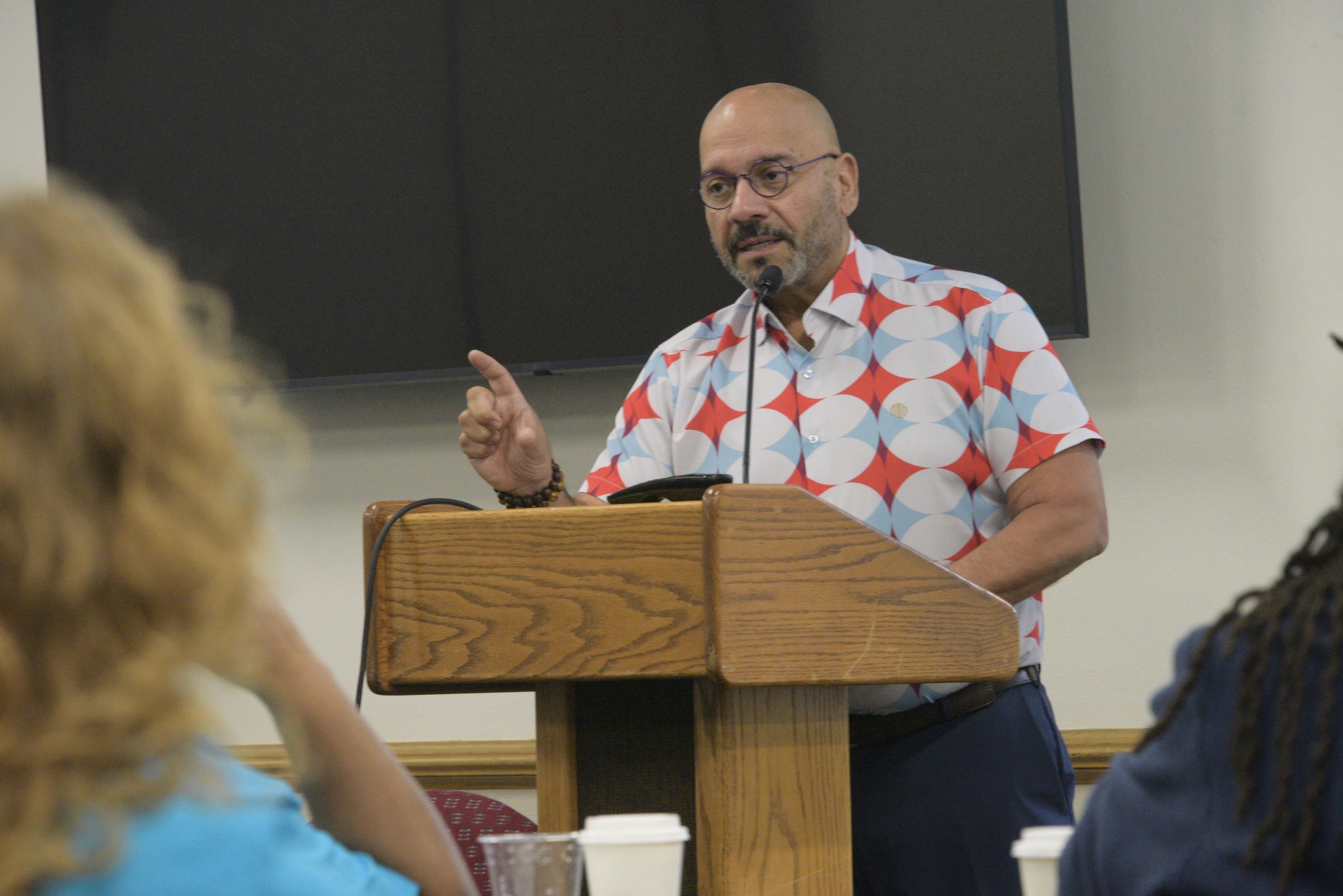
As a new scholar in Practical Theology, I had the opportunity, on Thursday, August 28, 2025, to sit under Rev. Dr. Victor Aloyo, President of Columbia Theological Seminary, who led this devotion as part of our orientation for new students. His message captivated me, and I decided to share it as quotes that continue to challenge and inspire me here on my blog, Practical Theology in Motion: Reflections of a New Scholar.
Called in the Mess, Not After It
Rev. Dr. Aloyo began with a powerful statement that set the tone for the devotion:
“God calls people right in the middle of messes—not after the dust settles, but while it’s still in the air.”
In a world of fractured relationships, relentless news cycles, and deep divides, the call of God is not delayed until peace returns. The call is present, urgent, and rooted in hope.
Remember Who Calls You and Who You Are
Before Jeremiah was sent out, he was reminded of his identity. Rev Dr. Aloyo emphasizes that truth:
“Before Jeremiah is given a task, he’s given an identity: ‘Before I formed you in the womb I knew you, I appointed you.’ The call begins with belovedness.”
He warned against forgetting this foundation in today’s polarized world:
“People who forget who they are will do anything to belong. Churches that forget whose they are will echo whatever chorus is loudest. But those who remember can stand as non-anxious presences—courageous, patient, and willing to show up.”
Receiving the Shape of the Call
The call to ministry is not neat or simple. It is disruptive and constructive.
“Jeremiah’s verbs are striking: pluck up, pull down, destroy, build, plant. The call involves disruptive and constructive work.”
Rev. Dr. Aloyo described this shape as truth-telling, table-making, and bridge-building:
-
Truth-telling
“Truth-telling is not partisan, it is pastoral. It means naming sin—including racism, hatred, exploitation, and indifference. It means confessing when we’ve been complicit. It means preaching God’s word with both clarity and tenderness.” -
Table-making
“Jesus didn’t just fix the world with speeches; He set tables. He walked alongside the despised, shared their concerns, and taught His disciples to stop and notice small acts of faith.” -
Bridge-building
“It is courageous peacemaking that confronts lies, protects the vulnerable, and refuses to demonize neighbors. Christ is our peace, breaking down walls of hostility.”
Relying on the Spirit’s Power
The devotion closed with a reminder that ministry cannot be sustained by personal strength alone.
“When Jeremiah protested, ‘I am only a youth,’ God replied, ‘Do not be afraid, for I am with you.’ The call never assumes we can carry it alone.”
“Not by might, nor by power, but by my Spirit, says the Lord. The Spirit breathes courage into exhausted disciples, reminding us we are not alone.”
A Word of Encouragement
For anyone struggling in ministry, Rev. Dr. Aloyo’s final words were both grounding and hopeful:
“Faithfulness is not the same as success. Fruit takes time. The promise is not that ministry will be easy but that Christ is present.“
“You are called for such a time as this—not to win arguments, but to bear witness. Not to escape the world, but to embody God’s kingdom within it. God calls us right in the middle of it.”
My Wonderings as a New Scholar
Hearing this exhortation as a new Practical Theology scholar, I could not help but wonder about the wideness of God’s calling. God does not only call pastors, missionaries, or chaplains —He calls each one of us into His vineyard, right from where we are and through our professional vocations.
Whether you are a university lecturer/professor, researcher, agriculturist, civil servant, business leader politician, or military personnel, you are not outside the scope of God’s call. In your place of work, God calls you to be His witness and to serve faithfully.
The Apostle Paul put it beautifully in Colossians 3:23 24 (NIV):
“Whatever your task, work heartily, as serving the Lord and not men, knowing that from the Lord you will receive the inheritance as your reward; you are serving the Lord Christ.“
With this in mind, I dare to see my academic, research work, and writing not as separate from God’s vineyard but as part of it.
Reflection Questions
- Where in your own life do you feel God calling you “in the middle of it”?
- What practices help you remember whose you are when the world tries to define you otherwise?
- How might you live out truth-telling, table-making, and bridge-building in your community this week?
- How can you see yourself serving God’s vineyard in your profession or daily work?
_____
Ayodele John Alonge,
Monday 1st September, 2025, 5:00am (EST)
MRC Apartment, Decatur, GA 30030