The Silence Around Violence Against Christians in Nigeria
There are moments in history when denial becomes more violent than the violence itself. We are living in such a moment in Nigeria. Where the evidence is visible, where graves are fresh, where towns stand in ashes, and where widows learn to pray alone, some government officials and some heartless citizens still insist that nothing systematic is happening. Instead of acknowledging the ongoing killing of Christians and developing strategies for justice, peace, and protection, the public narrative is often reduced to: “It is not only Christians that are being killed.” But the theological question remains: What kind of government watches while human lives are taken frequently in mass and feels no urgency to account for them?
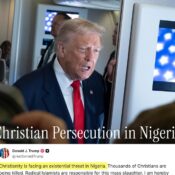
Even when global voices, including the U.S. President Donald Trump, raised concerns about what appears to be targeted religious violence, the Nigerian state dismissed these claims as exaggeration. The story was declared “criminality,” not persecution. Random, not coordinated. Tragic, but not genocide.
But those who bear the scars, whether physical, emotional, or spiritual, know a different reality.
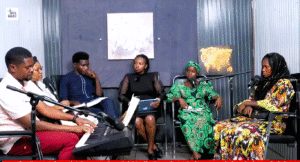
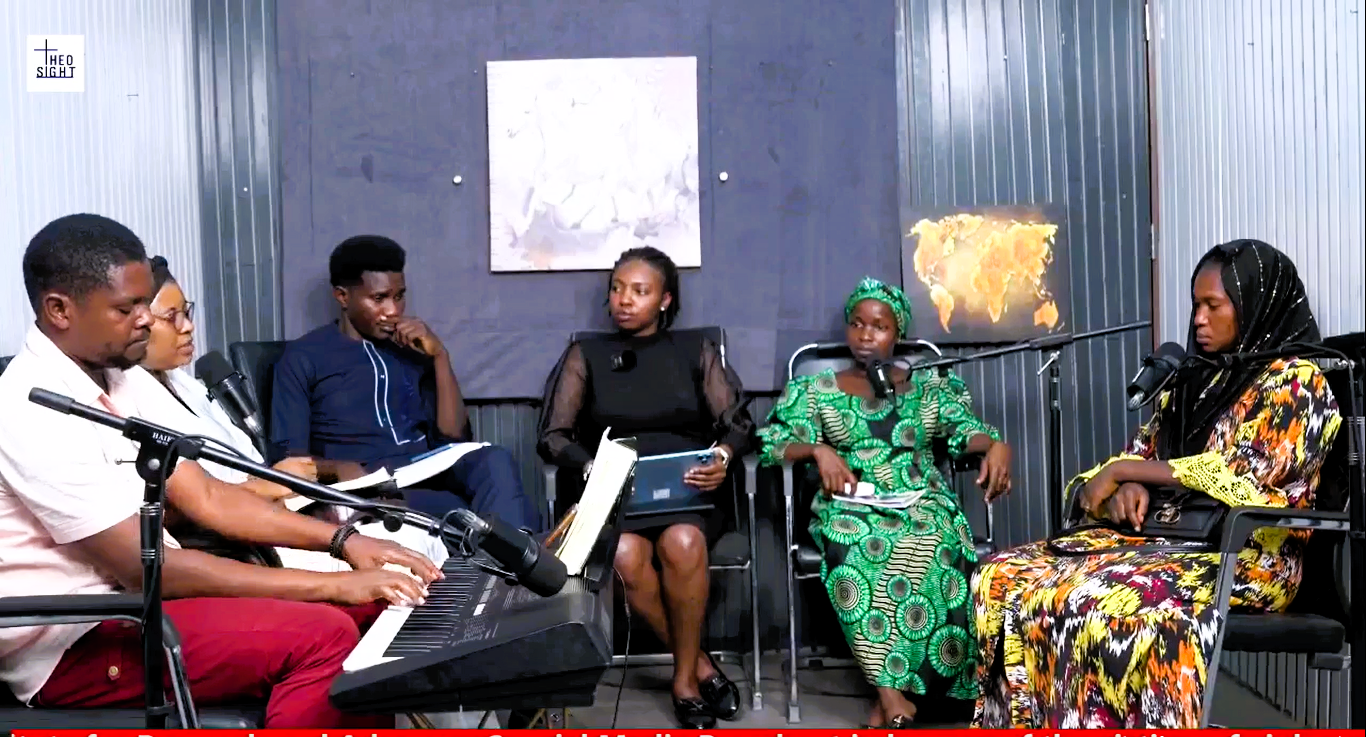
On November 5, 2025, the Theo-sight Institute for Research and Advocacy, where I am a trustee, held a Special Memorial Broadcast in Abuja to honor Christians who lost their lives to violence. That evening became a place for shared grief, a way to remember together, and a moment to hold onto our collective memory. In practical theology, memory is not just something we have; it is something we live. It is where research meets pain, where stories meet silence, and where faith faces reality. Remembering, in this way, is an act of resistance. It means refusing to let lives and stories be erased. To remember is to witness. To remember is to refuse silence.
A Gathering of Wounds That Speak
The evening started quietly. The ECWA Grace choir sang hymns that created space for grief. The music was gentle and careful, as if it understood the heavy stories to come. This gathering felt like a sanctuary shaped by shared sorrow.
When Rev. Dr Godwins Adeboye, the convener, in his introductions said:
“We are gathered to lament, but also to seek understanding, hope and renewed faith… To help communities reflect theologically on pain and resilience… and to speak peace into places of trauma.”
In that moment, the purpose of the gathering was unmistakable. This was not a forum for panel discussions or academic critique. It was not a symposium for opinion or policy debate. It was an assembly of witness.
Among those who shared their stories was Pastor Gideon Mutum from Southern Kaduna. His ministry has happened not in a church, but in the ruins of villages and near mass graves. His voice was calm, not because his story was easy, but because he had lived with it for a long time:
“I have witnessed not less than 35 mass burials.”
“We buried 40 people at the same time… over 213 human beings buried that I witnessed.”
Then, almost quietly, he added:
“These attacks are not theories. I was there. I saw the faces. I saw the families. I helped dig the earth.”
His words were not just numbers. They came as memories, as burdens, as wounds. These were not statistics for reports or distant tragedies to be summarised in statements. They were acts of grief, farewells said too often, too quickly, and with pain too deep to describe. Every burial, Pastor Mutum reminded us, was a sermon preached in silence.
Practical theology teaches that we should not watch suffering from a distance. To really hear these stories is to become part of them. To remember honestly is to take responsibility. On this night, that responsibility meant speaking memories out loud, even if the words shook, but without hiding or breaking.
In that room, we understood:
To witness is to refuse silence.
To remember is to resist erasure.
And this remembrance is now ours to carry.

Faith Under Fire: When Theology Learns to Breathe
Sometimes, faith is not just something we talk about, but something we hold onto. At the Theo-Sight memorial gathering in Abuja, this became very clear. We did not just hear stories; we saw faith alive in the midst of suffering, spoken by people who have faced great pain and still trust in God.
The first testimony came from a widow who had lost her husband in the service of the Gospel. She spoke quietly, with a strength that did not need volume:
“I felt like giving up. But when I look at the Christian life that my husband lived, I was encouraged… I know he is with Christ.”
In her words, theology was not academic. It was like breath, the air that keeps a grieving woman standing. It was the heartbeat that keeps going. Her faith was not theoretical; it was survival.
Then another voice spoke, a young woman who had been kidnapped twice. Her story came from wounds that were still healing:
“I was kidnapped twice… They were calling us idols worshippers… We will be singing praises, worship, we will be praying… I told him, God knows why He allowed this. And God will rescue us in His own time.”
Her theology was shaped not at a pulpit, but in the bush, under threat, waiting for dawn. Her prayers were whispered in the dark. Her faith was raw and trembling, but it was not broken. This is what I call living theology.
It is the faith that remembers God not when life is peaceful, but when life is violent.
It is the worship that rises not because conditions are safe, but because the soul refuses to let evil have the last word.
This is faith in action: faith that suffers, faith that endures, faith that will not die.
By listening to them, we learn something important: The truest theology is not found in books. It resides in people who have suffered and still hold on to hope.
Practical Theology in Motion: A Closing Reflection
What happened in that gathering was more than remembrance. It was theology in practice. The testimonies we heard did not stay distant; they filled the room and called us to stand with them. They reminded us that when violence is denied, not only is truth lost, but memory too. When memory is silenced, trauma grows and continues in the dark. Practical theology, when lived faithfully, refuses that silence. It moves toward suffering, not away from it. It becomes an archive, preserving memory so lives are not erased. It becomes advocacy, saying out loud what others are afraid to name. It becomes accompaniment, sitting beside the grieving in their night. And it becomes prophetic lament, naming pain where a nation prefers quiet. As Scripture affirms:
“Precious in the sight of the Lord is the death of His saints.”
— Psalm 116:15
Here, hope is not the same as optimism.
Hope is resistance. It is the belief that violence does not write the final sentence of our story.
Ayodele John Alonge
Tuesday November 9, 2025, 5:00am (EST)
Marcia Riggs Commons (MRC),
701 S Columbia Decatur, Atlanta Georgia