
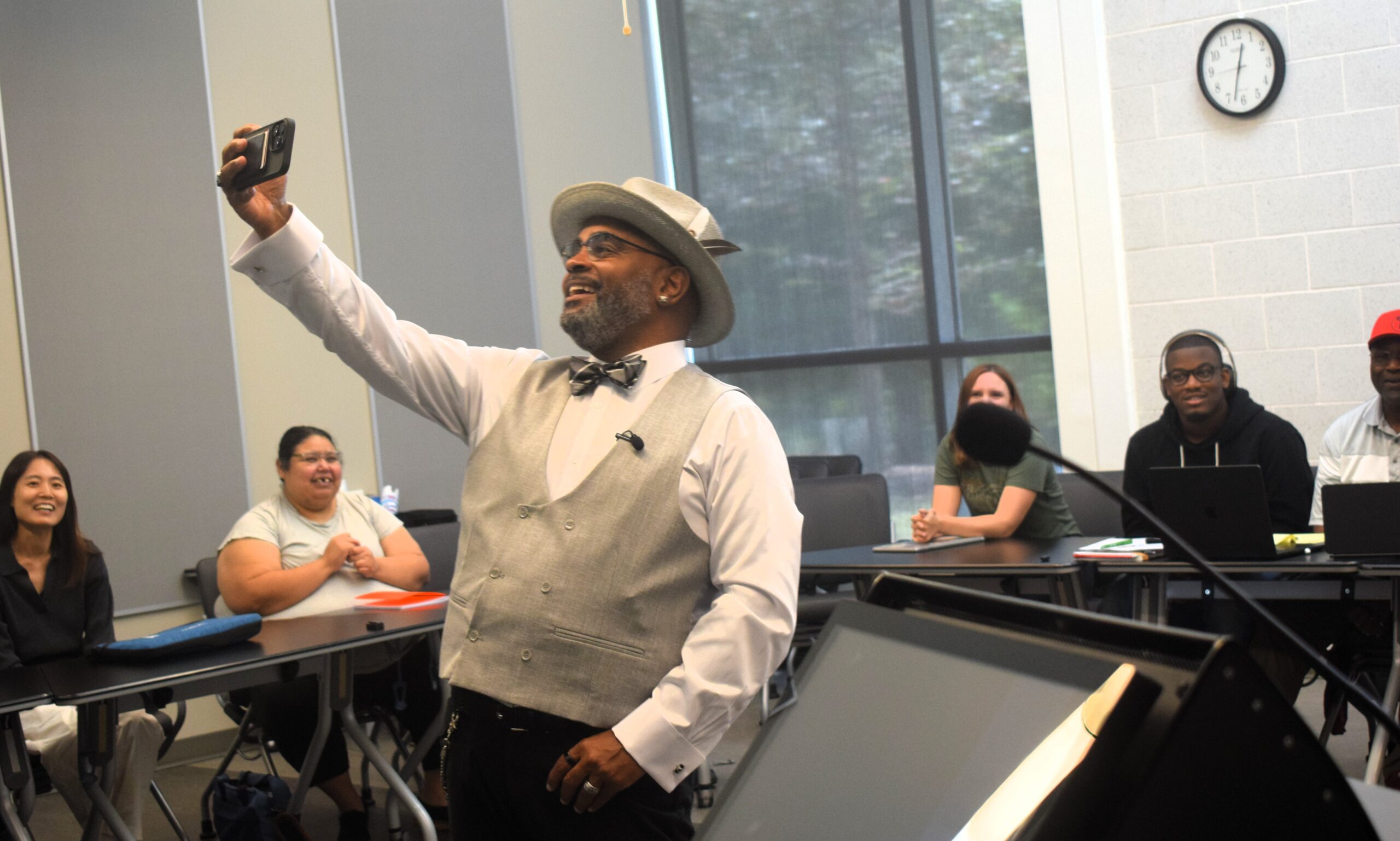
Imago Dei: How Can We Really See Each Other?
On September 18, 2025, I had the privilege of attending a special lecture by Dr. Ralph Basui Watkins, delivered as a guest session for Dr. William P Brown’s class “The Aesthetic Word: Discovering Creativity and Beauty in the Old Testament at Columbia Theological Seminary. As a new research assistant to Dr. Watkins, I came with a deep curiosity about the connections between photography, the Imago Dei, and practical theology. What I encountered in that lecture didn’t just inform me—it transformed my understanding of all three.
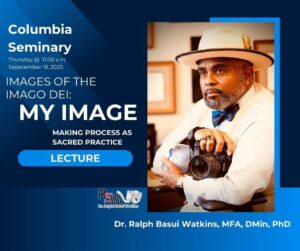
Dr. Watkins, known as “The Scholar with a Camera,” presented “Images of the Imago Dei: My Image-Making Process as Sacred Practice.” He showed us that taking portraits isn’t just about making pictures – it’s holy work. He sees photography as a way to honor God’s image in every person.
Dr Watkins was not just talking theory; he was showing us how theology works in practice. So, I asked myself: “How does this work show us what practical theology really is?”
These are some main points from the lecture, with my own wonderings as a new practical theology scholar.
- The Image of God as Our Foundation
- Dr. Watkins said: “God created humankind in His own image… When I take pictures, I am making images of God’s own image.”
- My wondering: So, if every person carries God’s image, then we should all look for that image in everyone we meet. Does it mean that practical theology is about using Bible truths (like Imago Dei) to guide how we treat people in everyday life? Is our work to help people see this truth in a practical way?
- Using Art to Fight Against Wrong Ideas
- Dr. Watkins said: “In our community, making portraits is an act of resistance… There is no civil rights movement without images. To see yourself is to be free.”
- My wondering: This is strong! His work is not just art; it is a fight. He uses his camera to challenge the wrong stories that society tells about Black people. So, I am asking: must practical theology always take the side of the oppressed? Can we be true theologians or scholars if we are silent when people are suffering? Does good theology require us to act?
- The Method: Working Together in Partnership
- Dr. Watkins said, “Every good picture starts with presence. You must first see and hear the person well… My work is a sacred partnership.”
- My wondering: His process is not rushed. He spends time with people. He creates enabled environment. He listens before he shoots. This makes me think about my own work as a scholar. How can I make sure that I am not just studying people but working with them? Should practical theology be a collaboration, and not just observation? How do we research with a community, not just on them?
- The Importance of Joy and Respect
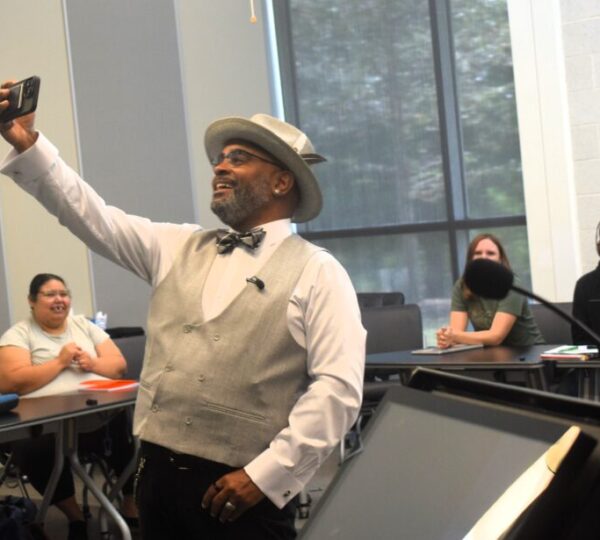
- Dr. Watkins said: “One of my values is fun… It is about the relationship. It is a love reaction.”
- My wondering: He said “fun” is important. This is deep, and I truly see this during his lecture. No dull moments. In our serious academic work, we can forget that God is a God of joy. His “fun” is a way of showing respect and creating a safe space for people. So, what is the place of joy and celebration in our theology? Does our work bring life and happiness to people, or does it only analyse their problems? How can we make our methods more respectful and life-giving?
- Theology is Not Cheap
- Dr. Watkins shared that he once lost his job because he supported LGBTQ+ brothers and sisters. He said he was “cool with that” because he knew he was doing the right thing.
- My wondering: This one shook me. Theology can have a price. It can cost you something. His work comes from a strong stand for justice and the belief he holds . This makes me ask the big question: Where do I stand? Who is my theology for? Who does it help? If my theology has no cost, is it truly following the way of Jesus?
My Concluding Wonderings
Dr. Watkins’s lecture didn’t just give us some answers—it opened my mind to more important questions. He showed me a practical theology that is:
Real: It happens through action.
Thoughtful: It understands history and power.
Relational: It is built with people, not just observed.
Brave: It chooses a side for justice.
This leaves me with urgent questions for myself, to you as you read this and to other new scholars:
- If practical theology is about living out what we believe, then what are we actually doing?
- Are we only going to write about ideas, or are we going to put them into practice like Dr. Watkins?
- How can we make sure our work doesn’t just talk about faith—but actually helps to liberate and heal, connect people?
The wondering continues, and now it is our turn.
_________
Ayodele John Alonge
Friday 19th September, 2025, 08:00pm (EST)
Marcia Riggs Commons (MRC),
701 S Columbia Decatur Gorgia

Excellent article, John.
I so agree, thanks for helping me understand what I have been trying to practice in my ministry.
This discussion demonstrates an increasingly outstanding reflection on the “imago Dei” from the perspective of Dr. Watkins. I believe professor Ralph Watkins is a work of art, a brilliant scholar with a ” divine tool” who embodies the imago Dei. His ability to point out the “imago Dei” using the lens of photography and practical theology is self-explanatory and to think highly of other human beings as he is made in the image of God is a powerful endeavor. We have to be authentic and genuine in our identity with others. The way we see others in the imago Dei strenthens transformation and inspires love. My goal is to look at the imago Dei differently from the perspective of my ministry context and to propose that African christian scholars continue to ruminate deeply around the subject without trying to undermine the profound scholarship and faith practice laid out in this article and other faith traditions.
My main questions are :
How do we see other people? What do we use to see others in the image of God? These questions are pertinent to the church and they raised serious concerns in society today. This is not only a spiritual inquiry but a well-rounded, holistic and powerful approach to understanding God in human beings. It is an important dynamic of faith and praxis.
To this end, I think it is more helpful to practice what we believe than become neutral, idle or calm in our response to faith and praxis. I argue that theology is not neutral but highly competitive effort that insist on our humanely inspired position. The church should stand up to continue to love, bless and embrace others. As an African student of theology the imago Dei for me reflects “being made in the image of God” an ongoing relationship with God and humans. The imago Dei enhances community among us. God is part of our communal life and God is consistent with how we see one another and connects to each other by staying closely to African traditions and christian scriptures. Thus, as theologians, Pastors, teachers, researchers and students of theology it is essential to delve more deeply into the imago Dei and engage in the intersection between praxis and theology offering a transformative approach to the critical issues of faith and the reality of life. We love not only when we seek to pay close attention to the creation of God but by being sensitive to the lived reality of life, empathetic and compassionate to individuals around us and intentional about unlocking the potential of our faith in God. To put clearly loving God means loving all that God has created including those who are not like us. It is true when we see people we see God through them as we see ourselves made in the image and likeess of God.
To close, the imago Dei connects us closely together by using the lens of photography or art to portray the image of God in us. We are able to discern the ways God portrays himself in us by co-creating with God the world of love, compassion and justice for all. I join the African church to cultivate a communal approach to the gospel witness of Jesus Christ as we discuss the imago Dei. To this point I stand as an African student of theology, Pastor,Teacher and researcher to point out that the image of God in the community is not discriminatory, or cruel but it calls us to be accountable to God and responsible to one another. To illustrate this point clearly I would like to say that community in Africa Liberia culture is like a palm tree. The palm tree is one body with many different parts producing palm branches for decorating at events, palm oil for food, logs for bridges and straws for bed,etc. Community means one together with others. This dynamic brings individuals and groups together for sucess and spiritual growth. With community we seek not to divide, not to afflict the imago Dei within others but to offer life and love to everyone. God made us and dwell among us . God authors community. It is oneness, unity, among us and support for all. We support one another without being judgemental. Community helps us see who we are in God and understand everything around us.
The church today needs to pursue the imago Dei as a divine communal activity of God that is free from bias and sentiments. Our effort should provide opportunities for understanding scriptures, missions and spiritual formation. The community is the image of God we use to see others closely like us.
Similarly, I wonder :
How does the message of loving others and oneness in the imago Dei offer understanding for missions and the gospel of Christ among all in the world?
How is looking at the imago Dei differently connects or disconnects us to the understanding of God in other christian traditions today especially with LGBTQ+?
Great job John on your reflections. Thanks for the brilliant scholarship.